
Last updated: July 2026. Renovation cost figures on this page come from our own project records across 1,000+ Arizona renovations since 1999.

If your house needs work, you already know it, and you have probably felt the two pressures that come with it. Part of you thinks you should fix it up first to get more for it. The other part knows that fixing it up means money you may not have, time you may not have, and living in the middle of a construction project while you do.
Selling as-is means selling the house in its current condition: no repairs, no cleaning it out, no fronting the cost of work that may or may not pay you back. In Arizona it is a legitimate and common way to sell, and for many homeowners it is the more honest math.

We Buy Houses Arizona™ has bought as-is properties across the state since 1999, more than 2,000 of them. But the part that matters most to you is what happens after we buy: our sister company, House Depot Real Estate, renovates them. Founder Stephen W. Rockwell has personally overseen those renovations, every step and nearly every dollar. We do not mention that to impress you. It is the reason we can tell you, accurately, what your house actually needs, including the expensive surprises that do not surface until the walls are open.
Here is what those renovations teach you: most homeowners dramatically underestimate what the work costs and how long it takes. The kitchen that looks like a $25,000 weekend project on a renovation show is often a $50,000 job that runs three months, and that is before the surprise behind the drywall. We have bought hundreds of houses from owners who started a remodel, blew past their budget and their timeline, and decided that selling the unfinished project was the saner path. There is no judgment in that. It is one of the most common reasons people call us.
This page gives you the straight version: what selling as-is actually means in Arizona, what you do and do not lose by skipping the repairs, when as-is is genuinely your best move and when it is not, and how the sale works. You can verify everything we claim about ourselves before you ever call, and we will tell you honestly when listing would put more money in your pocket, even when that is not us.
Since 1999
 Helping Home Sellers
2,000+
 Local Homes Bought
A+ Rated
 Better Business Bureau
What “Selling As-Is” Actually Means in Arizona
“As-is” is one of the most misunderstood phrases in real estate, and the confusion costs sellers real peace of mind. Selling as-is simply means you are selling the house in its current condition and you will not be making repairs. It does not mean you are doing anything shady, and it does not mean you have to hide a thing. In fact, it means close to the opposite.
When you sell to us as-is, that reality is written directly into our purchase agreement: we are buying the property in its current condition, problems and all. We are not asking you to fix the roof, service the air conditioning, patch the drywall, clean the place out, or touch a single thing. We have renovated houses in every condition imaginable since 1999. Whatever is wrong with yours, we have almost certainly seen it, priced it, and fixed it before.

There is one honest expectation that runs both ways. Selling as-is does not mean hiding problems. If you know about a material defect, a leak, foundation movement, electrical issues, anything that genuinely affects the property, we expect you to tell us. You do not have to fix it. You just have to be straight about what you know, the same way we are straight with you. As-is is about skipping the repairs, not skipping the truth.
It is in writing, not just a promise. Our purchase agreement gives you full permission to leave any and all personal items, inside or outside the property, at closing. Anything you do not want stays, and clearing, selling, or donating it becomes our responsibility. You are not required to clean the property, inside or out, before you close. Most buyers say “no cleaning needed.” Ours is written into the agreement you sign.
Because we are not using a licensed-agent listing agreement, your sale does not run through the standard MLS disclosure paperwork, like the SPDS form, that an agent-brokered sale uses. The as-is terms live in our own direct purchase agreement instead, in plain language, so you can read exactly what you are agreeing to. And because we buy with our own cash, there is no lender and no inspection period for a retail buyer to weaponize. That inspection period is where traditional deals most often fall apart: an overambitious inspector and a buyer who has watched too many real estate shows can turn a house you already had under contract into a stressful, expensive round of price-chipping. Selling as-is for cash removes that entire landmine. You sell the house, in its current condition, with what you know disclosed, and that is the end of it.
This page explains how we handle as-is sales and is not legal advice. For questions about your specific situation, a licensed Arizona attorney or your title company can confirm the details.


Can You Sell a House As-Is Without Repairs or an Inspection?
Yes, and this is where selling as-is to a cash buyer is genuinely different from a traditional sale. To answer it clearly, it helps to separate three things that often get tangled together: repairs, inspections, and disclosure. They are not the same, and only one of them still applies when you sell to us.
Repairs: none required. You do not fix anything. Not the roof, not the air conditioning, not the cosmetic wear, not the half-finished project in the back bedroom. We buy the house in its current condition and handle all of it after closing.
The lender’s inspection: gone. On a traditional sale, the buyer’s mortgage lender often requires certain repairs before it will fund the loan, which means one flagged item can hold the entire sale hostage. It does not take much. Even minor water damage under a kitchen or bathroom, or failing exterior paint or stucco, is enough for certain loan types to flag the deal in underwriting and refuse to fund until the repairs are done. Because we buy with our own cash and no loan, there is no lender, and no lender-required repair list. That single fact removes one of the most common reasons as-is sales fall apart on the open market.
The buyer’s inspection contingency: gone. On a retail deal, the inspection period is where a buyer renegotiates the price or walks away. Sell to us as-is and there is no inspection contingency hanging over the deal waiting to reopen the price.
Your disclosure: still there, and that is a good thing. The one piece that does not go away is honesty. You still tell us what you know about the property’s condition. That protects you as much as it protects us, and it is the foundation of a clean sale that closes without surprises.
So where does our own look at the house fit in? Usually a quick walkthrough, often under thirty minutes, and once in a while, if the home was recently listed with good photos still online, an offer sight unseen. But most of the time we prefer to walk the property and meet you in person, not to hunt for reasons to chip the price, but to understand your situation, your timeline, and what you actually need, so we can structure the sale around you. It is a conversation, not an interrogation, a very different experience from sitting across the table from a retail buyer’s inspector.



How Much Do You Actually Lose Selling As-Is?
“Lose” is the wrong word, and the honest answer is more useful than the one most buyers give you. The real question is this: what does it actually cost, in money, time, and risk, to get your house to the condition a retail buyer expects? Because that cost is exactly what selling as-is lets you skip. And after more than 1,000 renovations since 1999, every one of them personally overseen, here is the part most homeowners do not know: that cost is almost always bigger, slower, and riskier than they think.

The cost is bigger than the estimate. Most homeowners walk into a renovation expecting to spend twenty to forty thousand dollars. A true gut renovation runs eighty to one hundred thousand, and on a higher-end home it can run two to three hundred thousand or more. Even a lighter refresh, carpet, paint, and the repairs that come with it, lands in the low twenties to forties on a nicer home. And the big-ticket surprises are the ones that hurt: a roof at the end of its life is fifteen to twenty thousand, an air conditioning system is nine to fifteen thousand, both done right, by the licensed contractors we trust. A homeowner who budgeted carefully can still meet a ten to twenty thousand dollar surprise that nobody saw until the work was already underway.
The time is longer than the plan. A typical renovation runs two to four months of actual work, and a larger one six to nine months. And finishing the work is not the finish line: that timeline only gets the house to the day it goes on the market, with no guaranteed date when it actually sells and the cash finally arrives. Every one of those months is a month you are still paying the mortgage, the taxes, the insurance, and the utilities on a house you cannot sell yet. Those carrying costs are real money, and they grow the longer the project drags, and the longer it sits on the market after.
The management is a job nobody warns you about. A renovation is budgeting, accounting, getting bids, and scheduling, before a single contractor shows up. Then the contractors do not show up. They start a job and disappear. They blow the schedule, file change orders that balloon the cost, and sometimes do work that simply is not done right. Getting a contractor to come back and fix shoddy work is one of the hardest things in this business.
A pro tip, whether you sell to us or not: never pay a contractor in full before the job is one hundred percent finished and approved by you. Once they are paid, getting them back to fix anything is nearly impossible. This single rule will save more homeowners more money than any other piece of advice on this page.
You have to live in it while it happens. A renovation means a disabled kitchen or bathroom for the duration, a house full of belongings with nowhere to put them, and the daily disruption of living inside a construction project. Add kids or pets and it becomes something most people only have to experience once to never want again.
And even when you do everything right, the retail sale has its own traps. Here is the surprise that catches even prepared sellers: you finish the work, list the house, and the buyer’s inspector flags a roof or an air conditioner that is genuinely solid, with years of life left, as something that “may need to be replaced in the next ten years.” The retail buyer uses it to fish for a discount. You did the work, and you are still negotiating against a problem that is not really a problem.
So when you sell as-is, you are not losing money. You are handing all of it, the cost, the months, the management, the disruption, and the risk, to someone who does this three to five times at once, year-round, and has done it since 1999. The difference between an as-is cash offer and a polished retail price is what that work genuinely costs plus the risk of doing it, risk you would otherwise carry yourself with no guarantee at the end. For many homeowners, especially those without the capital, the months, or the appetite for a project like this, handing it off is simply the better trade. Your offer reflects what your home actually needs, not a worst-case number, and it is not a guess: it is built on real numbers from a company that renovates these houses for a living.
One honest note. If your house needs only light cosmetic work, and you have the time and the money to do it, listing it on the market may put more in your pocket than any cash offer, ours included. We will tell you when that is the case. That is the difference between a buyer who wants the right outcome for you and one who just wants the house.

When Selling As-Is Makes Sense (and When It Doesn’t)

Here is something you will not hear from most cash home buyers: selling as-is is not always your best move. Sometimes it is exactly right. Sometimes listing with an agent will put more money in your pocket, and when that is true, we tell you so. Several times a week, we tell a seller they are better off with a good agent than selling to us.
The reason is simple. A house is only half the picture. The other half is you, your circumstances, your timeline, what you need to have happen and by when. Two people with nearly identical houses can have completely different best options, because their situations are different. So the honest answer to “should I sell as-is” is never a slogan. It depends on the full picture, and finding that full picture is our job.
We think of it the way a good doctor approaches a patient. A patient walks in with a backache, and a careless doctor throws pills at it and sends the bill. A good doctor takes the time: where does it hurt, how did it happen, what makes it better, what makes it worse. Only then does a real diagnosis come, and only then a recommendation that actually fits. Selling a house is no different. We ask, we listen, and we lay out all of your options, not just the one that ends with you selling to us. It is the same approach behind every situation we help Arizona homeowners through.
Selling as-is is usually the right call when:
- The house needs major work, a failing roof or air conditioning, foundation issues, significant damage, and you do not have the capital to fix it.
- Time matters: a foreclosure timeline, a divorce that needs the house sold, a relocation, or settling an estate from out of state.
- A renovation is already underway and stalled, over budget, or simply more than you want to keep living through.
- The property is tenant-damaged, inherited from a distance, or full of belongings you do not want to deal with.
- Certainty matters more than squeezing out the last dollar: a firm cash offer and a firm closing date you choose, with no financing or inspection contingency to fall through.
Listing with an agent may serve you better when:
- The house needs mostly light, cosmetic work, and you have both the time and the money to do it.
- There is no urgency forcing a fast close, so you can wait out the weeks a market sale takes.
- The likely retail price, minus the repairs, the carrying costs, the agent commission, and the months of waiting, still clears more than a clean cash sale would net you.
When the math and your situation point to listing, we say so. Sometimes the seller decides to sell to us anyway, for the speed and the certainty. Sometimes we help them find a qualified, experienced agent instead. Either way, they leave the conversation knowing the truth.
We hear the same thing almost every week: a seller tells us that another company told them “selling with a realtor is not a good option for you”, advice that was good for that company, not for the seller. You can hear the relief when someone finally gets a straight answer. That is the entire difference between a buyer who wants the right outcome for you and one who just wants your house.



Selling a House in Any Condition
When we say any condition, we mean it, and after renovating houses in every condition imaginable since 1999, very little surprises us. We have bought houses with failing roofs, dead air conditioning, foundation movement, fire and water damage, mold, and decades of deferred maintenance. We have bought homes mid-renovation, torn apart and stalled, and homes that needed nothing structural at all. Whatever shape yours is in, it is almost certainly something we have handled before.
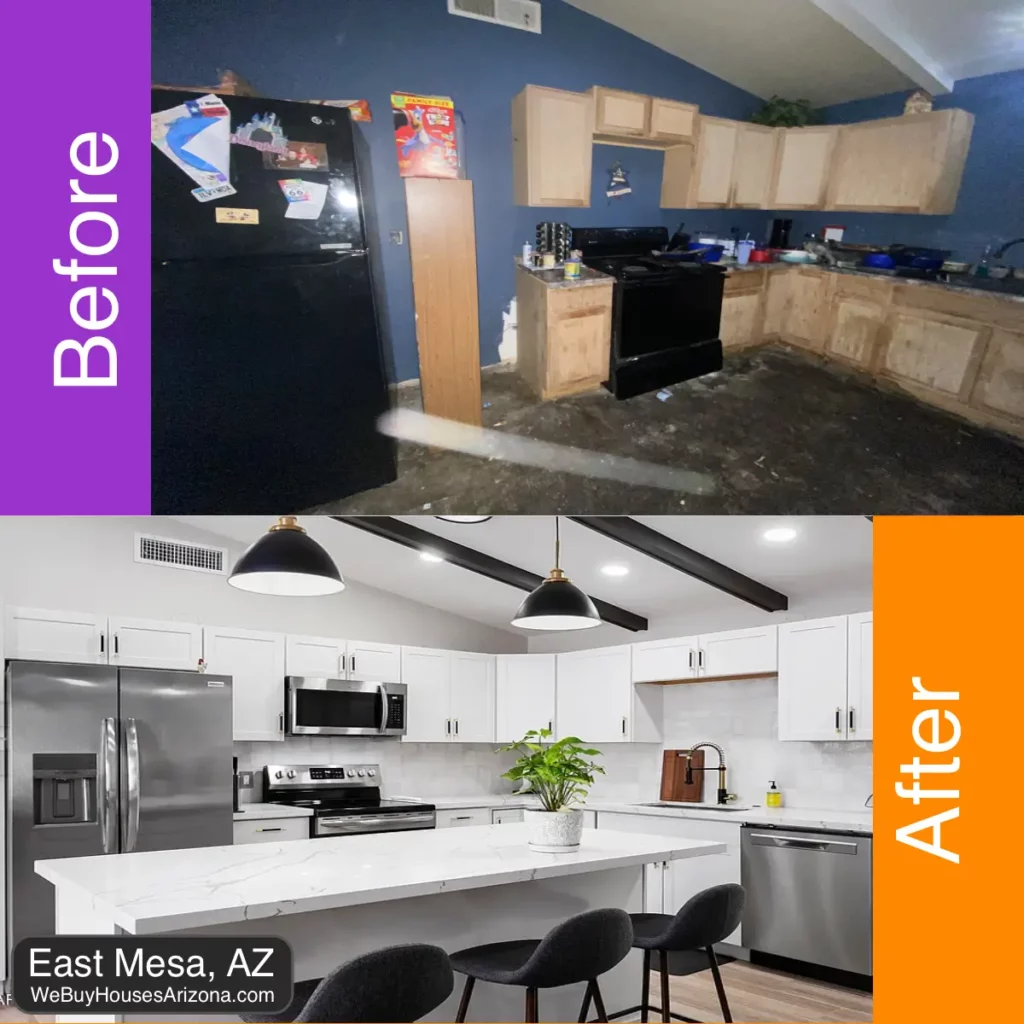

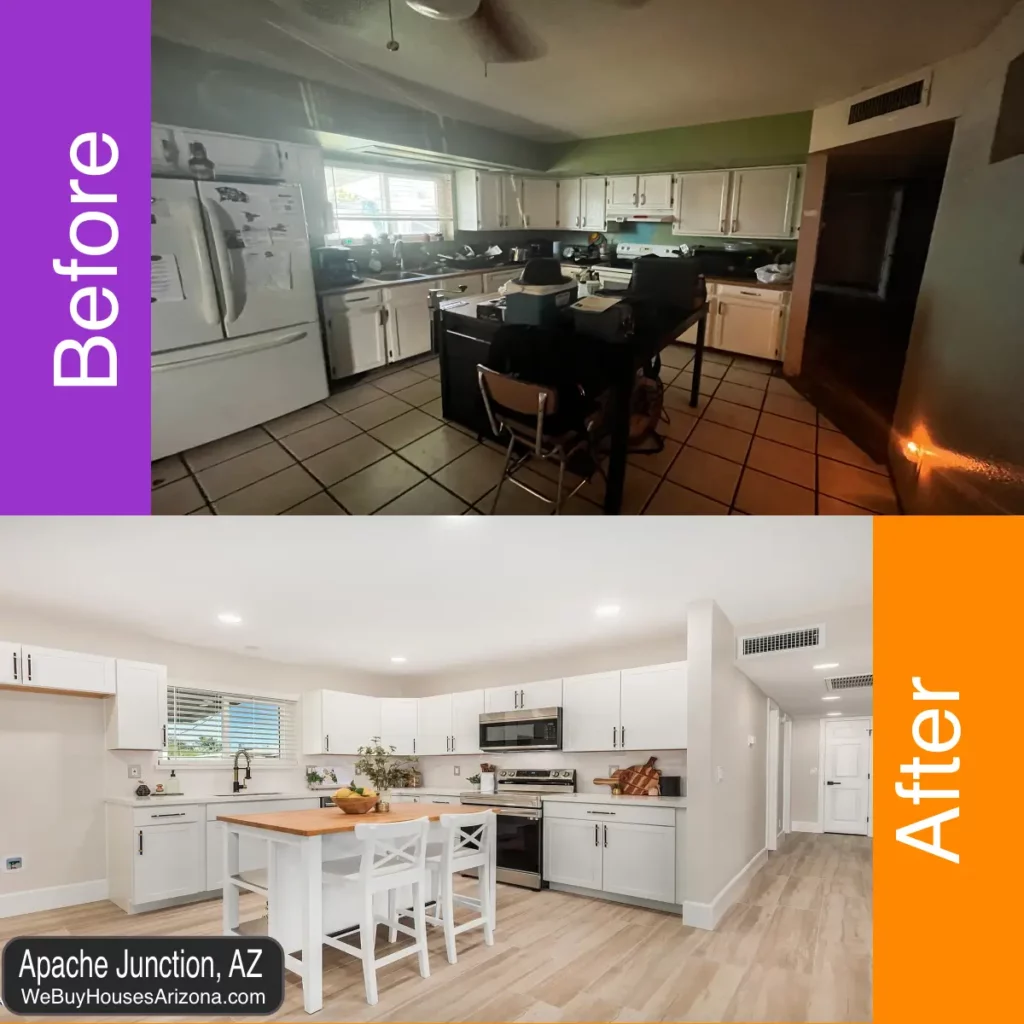
But “any condition” is not only about the house. Some of the hardest sales we handle are not about drywall and roofs at all. They are about everything tangled up inside them.
We once bought a hoarder house that took six forty-yard dumpsters to clear out. It was also a divorce: the husband was still living in the home, deeply attached to his belongings, while the wife lived out of state and was carrying all the bills. The situation was heavy, personally and physically. It needed a gentle touch, not a bulldozer. We arranged a storage unit, brought in a moving company, and handled the countless small details it took to get everyone through the sale with their dignity intact.
Another time, a seller owned a rental where his own daughter had stopped paying rent and damaged the property. He was moving out of state, needed the money, and needed the problem to simply be over. He asked us to handle the eviction. We took care of all of it.
That is what “any condition” really means in practice. It is the physical condition of the house, yes, the things that scare off retail buyers and the lenders behind them. But it is also the human condition around the sale: the belongings, the stress, the family conflict, the logistics nobody else wants to touch. Since 1999, we have become the buyer people call when the situation is complicated, not just when the house is.

One thing we will mention, not because we have to, but because it matters to us: when we clear out a property, the useful things do not go in the dumpster. Furniture, cookware, clothes, toys, anything someone else can use, we pack up and donate to local charities and churches. A house being cleared out still has good things in it, and good things should go to people who need them.
We will also be straight about the edges. There are a few cases we may pass on, a fire-damaged house in a city where the permitting and rebuild process is so slow and difficult that the timeline would not serve you well. When that is the case, we will tell you plainly rather than tie your property up. But those are the exceptions. If you are not sure whether we would buy your house, the answer is almost always yes, and the fastest way to find out is to ask.
How to Sell Your House As-Is in Arizona, Step by Step
Selling as-is should be the simplest sale you ever make, because the entire point is that you do not have to do anything to the house first. Here is the whole process, start to finish.

Step 1: Tell Us About the Property
Call or text (480) 444-2274, or fill out the short form. Tell us the address, who is living there, the condition, and your timeline. Be straight about what is wrong with the house, the worse it is, the more we want to hear it. There is nothing to fix, clean, or clear out first. Most of the time we will do a quick walkthrough, often under thirty minutes, which is really a conversation to understand your situation, not an inspection hunting for reasons to lower the price.

Step 2: Get Your Written Cash Offer
You receive a real written cash offer, typically within one business day, with the price and terms in plain language. It is built on actual renovation numbers from a company that fixes these houses for a living, not a lowball guess. There is no obligation to accept. And if a cash sale is not genuinely your best move, we will tell you that too. See how we calculate every offer.

Step 3: Choose Your Closing Date and Get Paid
If you accept, you pick the closing date that works for you. We hold direct accounts with our title companies and can send the agreement and deposit earnest money any time, day or night, a concrete sign you are dealing with an established, funded buyer, not someone hoping to line up money later. Closing runs through a licensed Arizona title company, and you walk away with cash. Leave behind anything you do not want; clearing it out is our job, not yours. And if you need time after closing to sort what stays and what goes, our Soft Landing™ program can write a short stay at no cost into the agreement, with a firm date.
This is the short version. For the full breakdown of our process, the underwriting, and the verification you can check, see how we buy houses in Arizona.
Frequently Asked Questions


How much do you lose selling a house as-is?
“Lose” is the wrong frame. Selling as-is lets you skip the cost, the time, and the risk of getting a house to retail-ready condition, and that cost depends entirely on what the house actually needs. A light refresh of carpet, paint, and minor repairs might run in the low $20,000s to $40,000, while a full gut renovation can run $80,000 to $100,000 or more, and most homeowners underestimate both the price and the timeline. Your offer reflects your home’s actual condition, not a worst-case number, and the gap between a cash offer and a polished retail price is essentially what that specific work costs, handed to a buyer who does it for a living.
Can I sell my house as-is in Arizona?
Yes. You can sell your house as-is in Arizona to a direct cash buyer in any condition, without making a single repair. You do not need to fix, clean, or clear anything out first. The as-is terms are written into our purchase agreement, so you know exactly what you are agreeing to.
Can you sell a house as-is without an inspection?
Yes. Because we buy with our own cash and no mortgage lender is involved, there is no lender-required inspection or repair list, and no buyer’s inspection contingency that can reopen the price later. We usually do a quick walkthrough of our own, often under 30 minutes, but that is to understand your situation, not to hunt for reasons to lower the offer.
What does selling a house as-is actually mean?
It means you sell the house in its current condition and make no repairs. When a property is sold as is, you do not fix anything, clean anything, or clear anything out. It does not mean hiding problems: you still disclose what you know about the property’s condition, you just are not required to repair it.
Can you sell a house with mold, fire damage, or foundation problems?
Yes. We buy houses in any condition, including mold, water and fire damage, foundation movement, failing roofs and air conditioning, and major deferred maintenance. Having renovated more than 1,000 homes since 1999, there is very little we have not already seen, priced, and fixed.
Do I have to clean out the house or remove my belongings?
No. Our purchase agreement gives you full permission to leave any and all personal items, inside or out, at closing. Anything you do not want stays, and clearing, donating, or disposing of it becomes our responsibility, not yours.
Should I sell my house as-is or fix it up first?
It depends on your house and your situation, and we will give you an honest answer, even when that answer is to list with an agent. As-is usually makes sense when the home needs major work you cannot fund, when time matters, or when a renovation has stalled. If the house needs only light cosmetic work and you have the time and money to do it, listing may net you more, and we will tell you so.
Do I still have to disclose problems if I sell as-is?
Yes, and it protects you to do so. Selling as-is means you are not obligated to repair anything, but you are still expected to disclose material defects you know about. As-is is about skipping the repairs, not skipping the truth.
How fast can you close on an as-is house in Arizona?
Most cash purchases close in about 7 to 14 days, and you choose the closing date that works for you. We hold direct accounts with our title companies and close through a licensed Arizona title company, so once you accept, there is no financing delay to wait on.
Still have questions?
Call or text (480) 444-2274
Get Your Cash Offer
Tell us about your house and we will get you a real, no-obligation cash offer. Call or text (480) 444-2274, or fill out the form to start. We Buy Houses Arizona has been buying homes across the state since 1999, and we will give you an honest answer about your best path, even when that path is not us.
Hours: Available 24/7. Live or assisted response any time.
Rather talk about it? Call or text (480) 444-2274
Content by Stephen W. Rockwell, Founder of We Buy Houses Arizona™. Mesa, Arizona. Est. 1999. BBB A+ Accredited. Updated July 2026.